Technical Information
|
|
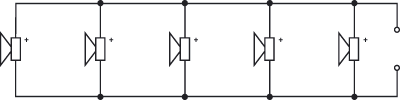
As the voltage on the line can approach 100 volts, installation must follow best practice with double insulated cable being used. Cable runs should be kept away from any potential source of interference such as 3 phase mains, data, telecom cables etc. 100V line systems must always be wired in parallel and the total load presented to the amplifier must not exceed the rated output of the amplifier or damage can result
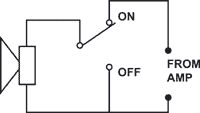
100V line loudspeaker switchingIn order to ensure that there is no breakthrough it is necessary to use the circuit below when switching 100 volt line loudspeakers either in groups or individually. The loudspeaker is not only isolated from the line but also shorted to itself in the "off" position thus excluding any possibility of breakthrough.
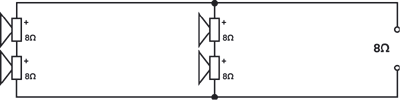
100V Line Volume ControlsThese controls are specially designed for 100V line operation and simply wired in-line (in series) between the speaker and the amplifier. The maximum power rating of the volume control must be observed and not exceeded, otherwise damage to both control and amplifier can occur. Low ImpedanceSome amplifiers in the Adastra range have the facility for connection of low impedance loudspeakers. Low impedance installations require heavy cable feeding the loudpseakers to minimise losses and short cable runs are recommended. Where it is intended to use multiple low impedance speakers to cover an aera, the speakers must be wired in a series/parallel arangement in such a way as to present the correct load to the amplifier.
Note: The total load impedance presented to the amplifier must never be below the rated amplifier impedance, otherwise damage can result. To avoid damage to the speakers the total power of the driver units should be at least 30% higher than the rated power of the amplifier. You must NEVER mix 100V line and low
impedance speakers on the same system.
Horn speakers are typically used in noisy environments, outdoors or areas that are quite large in size. The main disadvantage with this type of speaker is that they cannont reproduce music at all. General installation considerations
Courtesy of
|
|